Invasive ants create chaos in Hérault, causing trouble in residential homes and along the coastline beaches.
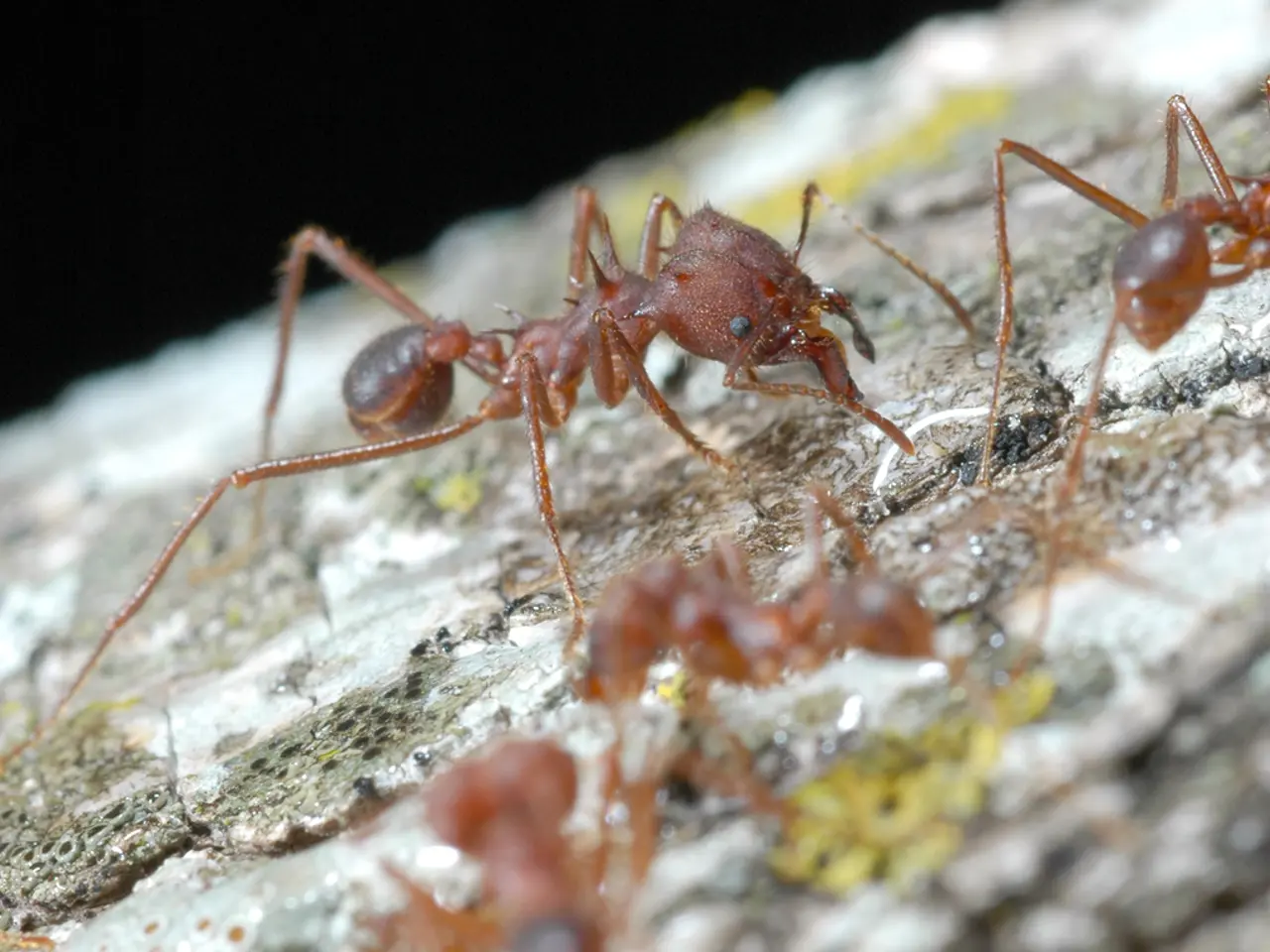
In the picturesque Southwest, center, and Loire Valley regions of France, an unwelcome guest has made its home: the invasive ant species Tapinoma darioi. This aggressive ant species, known for its resilience and destructive nature, has been causing significant harm to gardens and urban areas, leaving residents like Sarah Thielen and Nathalie Theurlay frustrated and tired.
Sarah, a resident of Saint-Aunès (Hérault), has been battling an ant infestation for three years. The ants have taken over her garden, creating a trail that sticks to her house, growing larger with each passing day. Similarly, Nathalie, who shares a garden, is also dealing with an ant invasion that is causing damage to her zucchini and potato plants.
The ants' installation is favored by climate change, enabling them to thrive in various environments. This invasive species is not limited to Saint-Aunès but is also affecting other parts of France, including public spaces in the neighborhood and nearby towns. In fact, the ant infestation is escalating on the coast, with an immense colony of several hundred million ants near the beach and vacationers.
Luc Gomel, a myrmecologist, has been alerted by residents about the ant infestation. He is now collecting individuals of this invasive species to better understand it. However, despite attempts to get rid of them, nothing has worked for Sarah or Nathalie in controlling the ant infestation.
Controlling or eradicating invasive ant species like Tapinoma darioi requires a multi-faceted approach. Here are some strategies that can be effective:
1. **Identification and Monitoring**: Confirm that the ant species is indeed Tapinoma darioi. Observe the ants' movements and nesting areas to understand their behavior and habitat preferences.
2. **Physical Barriers and Sanitation**: Seal cracks and crevices around windows, doors, and pipes to prevent ants from entering homes. Keep gardens and homes clean, removing food debris and standing water.
3. **Biological Control**: Encourage natural predators like anteaters, certain birds, and spiders, which feed on ants. Introduce ant species that competitively exclude Tapinoma darioi from resources.
4. **Chemical Control**: Use ant baits containing slow-acting poison that allows ants to return to their nests, killing the queen and eventually the entire colony. Apply insecticides around the perimeter of buildings and gardens to deter ants from crossing these areas.
5. **Cultural and Horticultural Practices**: Avoid moving plants from infected areas to prevent further spread. Use ant-repellent mulch to help reduce their presence in gardens.
6. **Community Involvement**: Inform nearby residents about the risks of invasive ants and encourage them to adopt similar control measures to prevent re-infestation.
7. **Professional Assistance**: If the infestation is severe, consider hiring pest control professionals who specialize in managing invasive ant species.
By combining these methods, it is possible to effectively control and potentially eradicate Tapinoma darioi from gardens and urban areas. Understanding how these ants are introduced through human activities, such as the plant trade, is crucial for preventing further invasions.
Despite these efforts, no eradication solution has been found for this ant infestation yet. The ants are getting into houses, causing stress and making it difficult for residents like Sarah to enjoy their outdoor space during the summer. The ant invasion is also affecting public spaces, causing frustration and concern among the community.
As the battle against Tapinoma darioi continues, it is essential for residents, myrmecologists, and local authorities to work together to find a solution and protect France's gardens and urban spaces from this persistent invader.
[1] Source: https://www.sciencedirect.com/science/article/pii/S0006320718300200
The unwelcome invasion of Tapinoma darioi ants in France presents a significant challenge in health-and-wellness and environmental-science, particularly due to climate change's role in supporting their thriving nature. As the ant infestation continues to escalate, residents like Sarah and Nathalie are seeking viable solutions, such as identification, monitoring, physical barriers, sanitation, biological control, chemical control, cultural and horticultural practices, community involvement, and professional assistance, to effectively eradicate these pests from their gardens and urban areas. Despite these efforts, a definitive eradication solution remains elusive, causing stress and disruption to residents and concern among the community. [1]